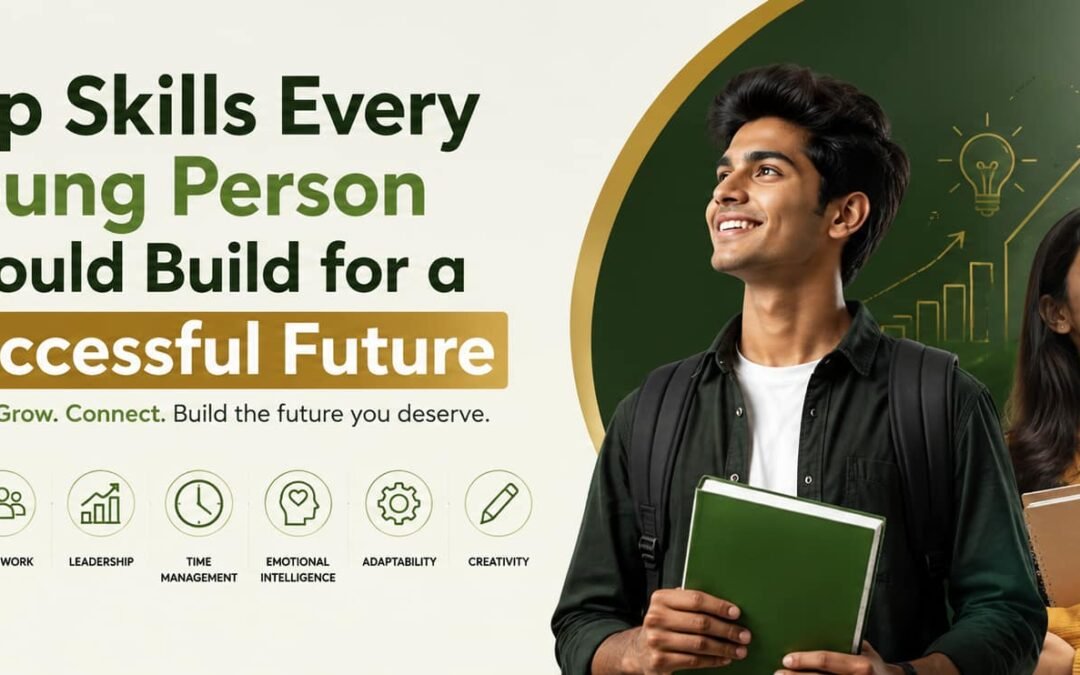
The world is changing faster than ever. Technology is transforming the way we learn, work, communicate, and build careers. For young people, this creates exciting opportunities—but it also means that traditional qualifications alone may not always be enough.
To prepare for the future, young people need more than academic knowledge. They need practical abilities that help them communicate, solve problems, adapt to change, work with others, and confidently explore new opportunities.
Building the right skills for young people can make a meaningful difference in education, career development, and personal growth. The good news is that these skills can be developed gradually through learning, practice, real-world experiences, and meaningful connections.
Here are some of the most important skills every young person should focus on building.
1. Communication Skills
Good communication is one of the most valuable skills a young person can develop.
Whether you are speaking in a classroom, attending an interview, working on a team, or meeting new people, the ability to express your thoughts clearly can open many doors.
Communication is not just about speaking. It also includes:
- Listening carefully
- Asking the right questions
- Writing clearly
- Presenting ideas confidently
- Understanding different perspectives
- Communicating respectfully
Young people can strengthen communication skills by participating in discussions, presentations, group activities, workshops, and everyday conversations.
Confidence grows with practice. The more opportunities you have to communicate, the more comfortable you become.
2. Critical Thinking and Problem-Solving
The future will require people who can think beyond obvious answers.
Critical thinking helps young people examine information, understand different viewpoints, identify challenges, and make better decisions. Problem-solving takes this a step further by helping them find practical solutions.
These abilities are useful in almost every career.
Instead of simply asking, “What is the answer?” young people should learn to ask:
“Why is this happening?”
“What are my options?”
“What could I do differently?”
Developing this mindset helps students become independent thinkers rather than simply depending on instructions from others.
Real-world projects, challenges, teamwork, debates, and practical learning activities can all help develop stronger problem-solving abilities.
3. Digital and Technology Skills
Technology is now part of almost every area of modern life. Young people do not necessarily need to become technology experts, but they should develop a strong level of digital confidence.
Depending on their interests and career goals, this may include:
- Using productivity tools
- Creating presentations
- Researching information online
- Understanding digital communication
- Learning basic data skills
- Exploring artificial intelligence and emerging technologies
- Understanding online safety and responsible digital behaviour
Digital skills can help young people become more productive and discover new ways to learn and work.
The key is to stay curious. Technology will continue to evolve, so learning how to learn new tools may be just as important as knowing a particular tool today.
4. Adaptability and Willingness to Learn
One of the most important skills for young people is the ability to adapt.
Career paths are no longer always linear. People may change industries, learn new technologies, take on different roles, or discover interests they never expected to have.
Adaptability means being willing to learn, adjust, and try again when circumstances change.
A growth mindset can help young people see challenges as opportunities to improve rather than reasons to give up.
Instead of thinking:
“I can’t do this.”
Try asking:
“What do I need to learn to do this better?”
This simple shift can encourage continuous learning and personal development.
5. Teamwork and Collaboration
Most professional environments require people to work with others.
Being a strong team member means more than completing your own responsibilities. It involves listening to others, sharing ideas, respecting different opinions, accepting feedback, and contributing toward a shared goal.
Young people can develop teamwork skills through group projects, sports, volunteering, workshops, events, clubs, and community activities.
Working with different people also teaches an important lesson: everyone brings different experiences, strengths, and perspectives.
Learning how to collaborate effectively can prepare young people for both professional and personal situations.
6. Creativity and Curiosity
Creativity is not limited to artists, designers, or writers. Every field benefits from people who can look at problems differently and generate new ideas.
Curiosity is often the starting point of creativity.
Young people should be encouraged to ask questions, explore new subjects, experiment with ideas, and learn beyond the classroom.
Reading, creating projects, exploring hobbies, attending events, talking to professionals, and trying unfamiliar activities can all help develop curiosity.
The goal is not always to find the “perfect” idea. It is to become comfortable exploring possibilities.
7. Time Management and Self-Discipline
Having good ideas and ambitions is important—but turning them into results requires consistency.
Time management helps young people balance studies, skill development, activities, personal responsibilities, and rest.
Simple habits can make a big difference:
- Set realistic goals
- Prioritise important tasks
- Break large projects into smaller steps
- Avoid unnecessary distractions
- Create a routine
- Review your progress regularly
Self-discipline does not mean working constantly. It means learning how to manage your time and energy intentionally.
Small, consistent actions often create better results than occasional bursts of effort.
8. Emotional Intelligence
Success is not only about technical ability. Understanding yourself and interacting effectively with others are equally important.
Emotional intelligence involves recognising emotions, managing reactions, showing empathy, and building healthy relationships.
For young people, this can help with:
- Handling pressure
- Accepting feedback
- Resolving disagreements
- Building relationships
- Understanding other people
- Managing difficult situations
Developing emotional intelligence can help young people become more confident and thoughtful individuals.
9. Networking and Relationship Building
Opportunities often come through people.
Building genuine relationships with teachers, mentors, peers, professionals, and communities can expose young people to ideas and opportunities they may not discover on their own.
Networking does not have to feel formal or intimidating. It can begin with something as simple as asking someone about their experience, participating in an event, joining a community, or staying connected with people who share similar interests.
The focus should be on building meaningful relationships—not simply collecting contacts.
10. Confidence and Self-Awareness
Finally, young people need to understand themselves.
What are your strengths?
What interests you?
What kind of work excites you?
What do you want to improve?
Self-awareness can help young people make more informed choices about education, careers, relationships, and personal development.
Confidence develops when you take action, learn from mistakes, and recognise your progress.
You do not need to have your entire future figured out today. You simply need to keep learning and taking the next step.
Building Skills Is a Journey
The most valuable skills for young people are not developed overnight. They grow through experiences, practice, feedback, curiosity, and continuous learning.
Education provides an important foundation, but experiences outside the classroom can also help young people discover their strengths and interests. Workshops, mentoring, events, projects, collaboration, and community experiences can create opportunities to learn by doing.
The future belongs to young people who are willing to keep learning, adapting, connecting, and growing.
You don’t need to master every skill at once.
Start with one.
Learn it.
Practise it.
Use it in the real world.
Then move on to the next.
Learn. Grow. Connect. Discover what’s possible.
Your future is not something you simply wait for—it is something you build, one skill and one experience at a time.